Cashew Testing Solutions
Cashew nuts are seeds from a tropical evergreen tree, Anacardium occidentale, belonging to the Anacardiaceae family. Though often referred to as nuts, cashews are actually seeds that grow inside a kidney-shaped hard shell, which is attached to a cashew apple. Cashews are classified as major tree nuts and can cause severe food allergies, including potentially life-threatening reactions. With about 18% protein content, cashew seeds have a high fraction of proteins, many of which are heat-stable. These proteins can still elicit an allergic response after production processes, making it crucial to monitor cashew traces in food products and avoid cross-contamination during manufacturing.
To ensure adherence to stringent food safety standards, the food industry must utilize highly sensitive testing equipment to thoroughly examine both the production environment and food products for cashew traces.
Mandatory labeling of tree nuts in food products
Tree nuts, including cashews, are among the most common causes of food allergies. In Europe and the United States, the prevalence of tree nut allergies as a whole is estimated to range between 0.2% and 0.5% in both children and adults. To safeguard consumers from the potentially fatal consequences of cashew nut consumption, allergen labeling is mandated by law in numerous countries. Cashew nuts, along with other tree nuts, are regulated in the EU (Regulation (EU) No 1169/2011) and the US (U.S. FDA – FALCPA 2004).
Fast and highly sensitive peanut analysis
At Romer Labs, we offer a range of highly sensitive and reliable allergen detection solutions, including test kits and analytical services. Our peanut test kit portfolio includes quantitative ELISA tests and qualitative lateral flow devices (LFDs) specifically designed for the detection of peanut proteins in environmental samples, rinse waters, and liquid and solid foodstuffs.

AgraStrip® Pro Allergen - Cashew/Pistachio

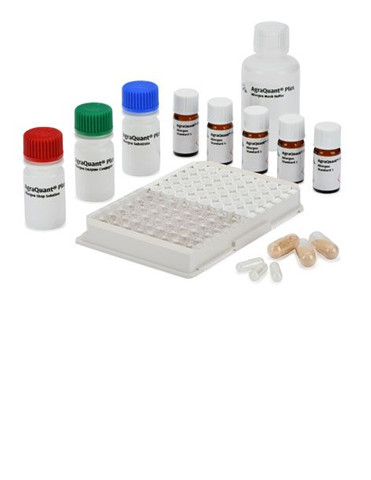
AgraQuant® Cashew