Crustacea Testing Solutions
Crustacea, a group of aquatic arthropods, include popular seafood options such as shrimp, crabs, lobster, and crayfish. They are widely consumed for their delicate taste and high nutritional value but can cause severe allergic reactions in sensitive individuals.
Cross-contamination risks are prevalent during processing, making it essential to monitor both the production environment and food products for traces of crustacean allergens. The food industry relies on highly sensitive testing equipment to maintain strict food safety standards and prevent allergic reactions.
Mandatory labeling of crustacean allergens in food products
Crustacean allergies are among the leading causes of severe food-induced allergic reactions. The prevalence of crustacean allergies in the general population is estimated to range between 1% and 2%, with higher rates observed in countries where seafood is a dietary staple.
To safeguard consumers from the potentially life-threatening effects of crustacean consumption, allergen labeling is mandated by law in many countries. Crustacea, as a major allergen group, is regulated in the EU (Regulation (EU) No 1169/2011), the US (U.S. FDA – FALCPA 2004), Canada, Australia, New Zealand, Japan, and many other countries. In these regions, the presence of crustacean proteins in foodstuffs must be clearly labeled to ensure consumer safety and awareness.
Fast and highly sensitive crustacean allergen analysis
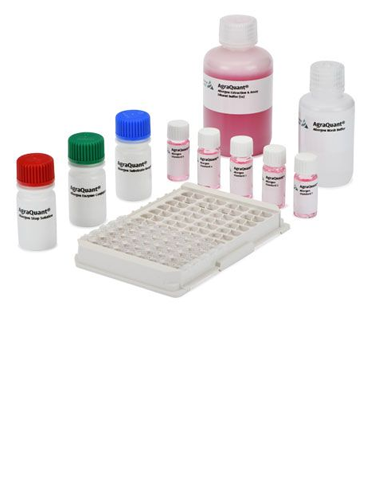
At Romer Labs, we provide an extensive range of solutions for crustacean allergen detection, consisting of test kits and analytical services. Our crustacean test kit portfolio features quantitative ELISA tests and qualitative lateral flow devices (LFDs) that are specifically engineered to detect crustacean proteins in environmental samples, rinse waters, and liquid and solid foodstuffs.
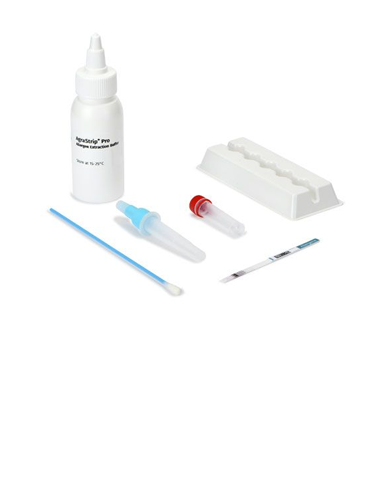
AgraStrip® Pro Allergen - Crustacea