milk Testing Solutions
Rich in proteins, fats, and vitamins, milk serves as a vital source of nutrition for young mammals and is a widely consumed food product in human diets. However, milk is also one of the most common food allergens, causing potentially life-threatening reactions in sensitive individuals.
Milk allergy and lactose intolerance are two separate conditions, with the former being an allergic reaction and the latter being a non-allergic food sensitivity resulting from an inadequate amount of lactase enzyme.
Milk and milk-derived products can contaminate other food items during production, making it essential to monitor both the manufacturing environment and food products for traces of milk. The food industry must employ highly sensitive testing equipment to ensure compliance with stringent food safety regulations.
Mandatory labeling of milk in food products
Milk and milk-derived products are among the most frequent causes of food allergies, with milk allergy affecting approximately 2-3% of young children in the United States and up to 4.9% of children in Europe. While many children with milk allergy outgrow the condition by adulthood, some may continue to be allergic throughout their lives.
To safeguard consumers from the potentially severe consequences of milk consumption, allergen labeling is mandated by law in numerous countries. Milk, along with other major allergens, is regulated in the EU (Regulation (EU) No 1169/2011) and the US (U.S. FDA – FALCPA 2004). Furthermore, the presence of milk proteins in foodstuffs must be clearly labeled by law in countries such as Canada, Australia, New Zealand and Japan.
Fast and highly sensitive milk analysis
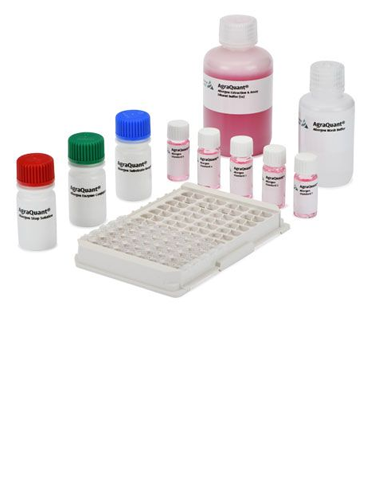
At Romer Labs, we provide an extensive array of allergen detection solutions, including test kits, reference materials, and analytical services. Our milk test kit portfolio includes quantitative ELISA tests and qualitative lateral flow devices (LFDs) specifically designed for the detection of milk proteins in environmental samples, rinse waters, and liquid and solid foodstuffs.
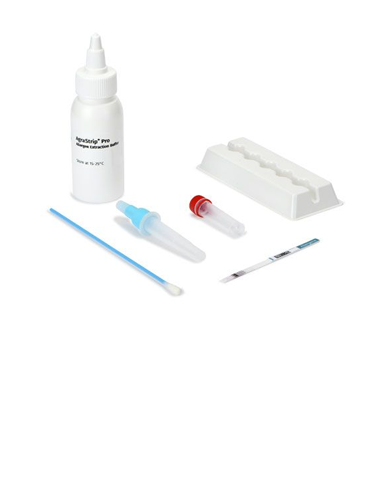
AgraStrip® Pro Allergen - Milk